
A dog that swims, rolls or simply walks in British weather brings a remarkable amount of water and mud back to the car. Wet fur smell is stubborn because it comes from bacteria on the coat transferring to fabric, and fabric holds it.
Contain the problem first
The single biggest improvement is keeping the dog off the carpet and the seat fabric entirely. A waterproof boot liner with raised sides catches water and mud before it reaches anything absorbent, and can be lifted out and hosed down.
If the dog travels on a back seat, a seat cover that covers the base and the backrest does the same job. Either way, the aim is to move the mess onto something washable.
Dry the dog, not the car
A minute spent towelling the dog before it gets in saves a great deal of work afterwards. Keep an old towel in the boot permanently. It sounds obvious, and it is the step most often skipped when it is cold and raining.
Clean on a schedule, not when it smells
By the time a car smells of dog, the fabric has already absorbed a lot. A short routine every couple of weeks is far less effort than an occasional deep clean:
- Lift and rinse the boot liner or seat cover
- Vacuum the boot and rear footwells, including the seat rails
- Wipe hard surfaces the dog contacts, including door cards
- Air the car out on a dry day with the boot open
Fragrance that works with pets
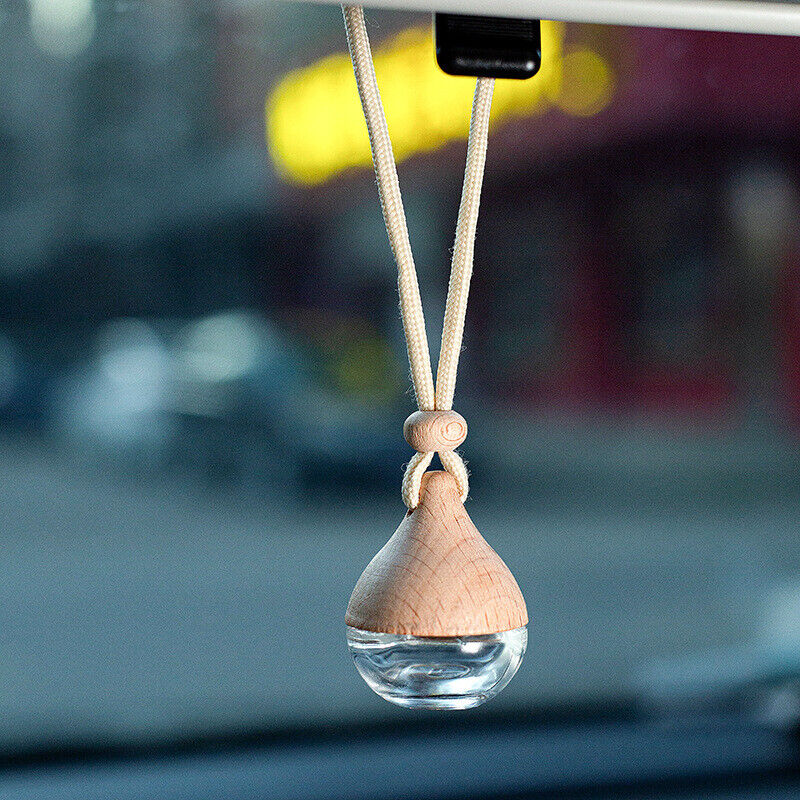
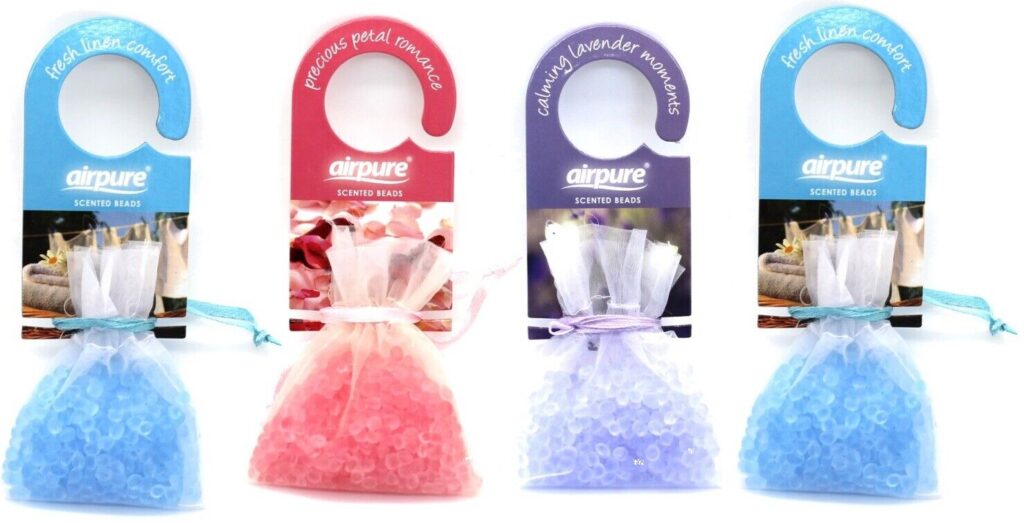
Dogs have a far more sensitive sense of smell than we do, so a strong vent clip in a small car is unpleasant for them. A milder passive product in the boot rather than the cabin gives you freshness without putting concentrated fragrance next to the animal.
Securing the dog properly
This is a safety point as much as a cleanliness one. An unrestrained dog is a hazard to itself and to everyone in the car, and the Highway Code requires that animals are suitably restrained.
- A boot guard or dog guard, which keeps the animal in the load area
- A crate, which is the safest option and also contains mess completely
- A harness clipped to a seat belt point for dogs travelling on a seat
A crate has the useful side effect of concentrating every bit of mud and hair into one removable container.
Hair, which is harder than mud
Mud dries and vacuums out. Hair weaves itself into fabric and resists suction entirely, which is why a vacuum alone never seems to finish the job.
- Go over the fabric with a rubber glove or a damp cloth to gather hair into clumps
- Vacuum the clumps rather than trying to suck hair out of the weave
- Use a pet hair brush on carpet, working in one direction
- Finish with the vacuum crevice tool down the seat seams
Doing this before the hair works deep into the fabric is much easier than afterwards, which is the argument for a fortnightly routine rather than an occasional blitz.
Heat, and leaving dogs in cars
Worth stating plainly because it kills dogs every summer: a car parked in twenty-two degrees can exceed forty-seven degrees inside within an hour, and leaving windows open makes very little difference.
If you travel with a dog regularly, plan journeys so the animal is never left in a parked car in warm weather. Sunshades on rear windows and good ventilation help while driving but do nothing once the engine is off.
Frequently asked questions
Will a boot liner protect against claws as well as water?
A heavy waterproof liner will resist claw damage far better than carpet, though no liner is completely scratch-proof with a large, excitable dog.
How do I get dog hair out of fabric seats?
Vacuuming alone rarely lifts it. A rubber glove or a damp cloth dragged across the fabric gathers hair into clumps that are then easy to pick up.
