

Cup holders collect everything: drips, sugar, dust, coins and the occasional catastrophic spill. They are deep, narrow, often oddly shaped and sometimes have a light or a USB port at the bottom, which makes cleaning them properly awkward.
Why they are such a problem
A sugary drip dries into a sticky film that holds dust. Because the holder is deep and narrow, a cloth cannot reach the bottom corners, so the film builds up year after year. On cars with illuminated or electrified holders, getting liquid down there is a genuine fault risk.
The simple fix
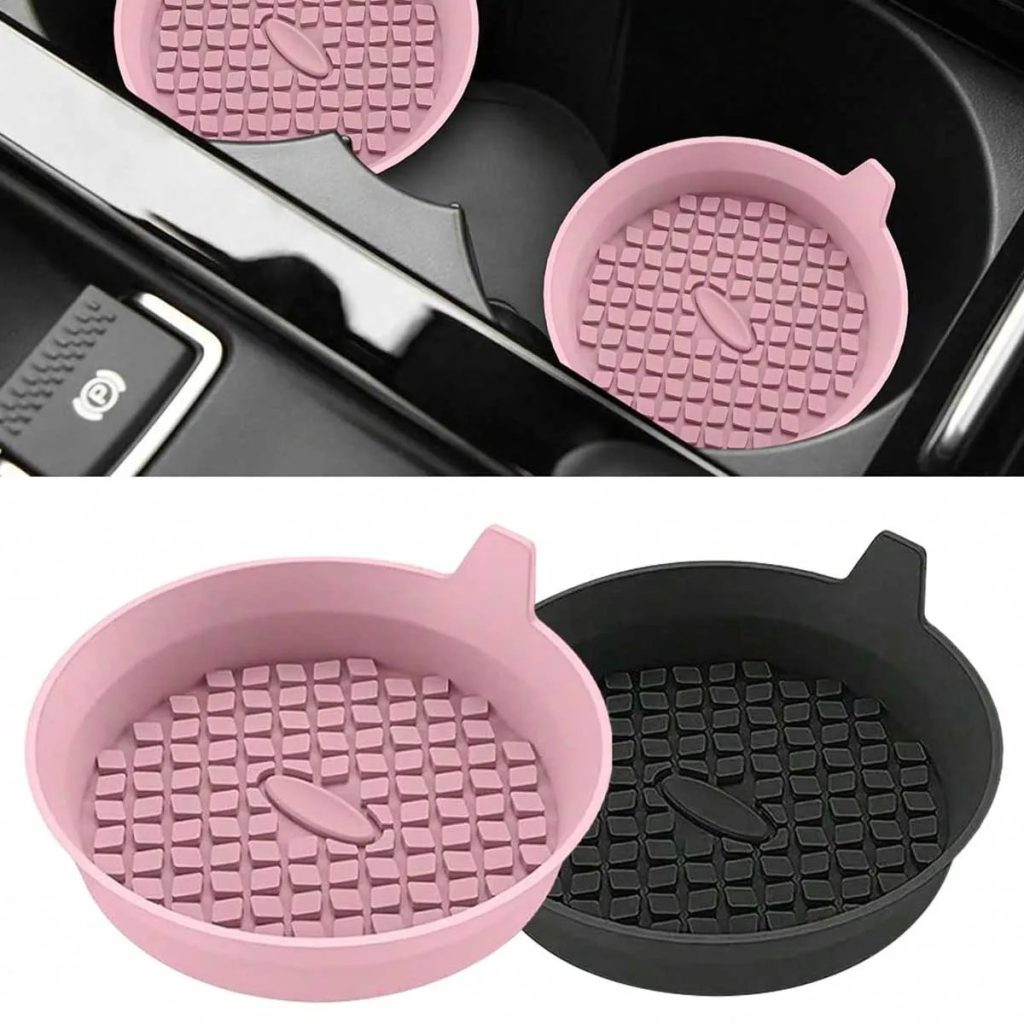
A silicone or rubber coaster insert sits in the bottom and takes everything. When it gets sticky, it lifts out and goes under a tap. That is the whole idea, and it removes the problem permanently.
Look for inserts that match your holder diameter and are deep enough to catch drips rather than just cover the base.
Cleaning one that is already bad
- Vacuum out loose debris with a crevice tool
- Wrap a microfibre around a blunt tool to reach the bottom corners
- Use an interior cleaner, applied to the cloth rather than sprayed in
- For set-on sugar, a slightly damp cloth left in place for a few minutes softens it
- Dry thoroughly, particularly around any electrical contacts
Do not pour water into a cup holder to soak it. Many drain into the centre console rather than out of the car.
A note on fit
Inserts reduce the internal diameter slightly. If you use a wide travel mug that is already a tight fit, check it still seats before buying.
Drinks that cause the most damage
Not all spills are equal. Sugary soft drinks are the worst, because the sugar remains sticky indefinitely and attracts dust. Milky coffee is second, because it smells within a day in a warm car.
- Fizzy drinks: sticky residue, attracts dust, hard to fully remove
- Milky coffee and tea: smells quickly, needs enzyme cleaning
- Fruit juice: stains, and the acidity can mark some plastics
- Water: harmless unless it reaches electronics
- Energy drinks: the worst combination of sugar and colour
Choosing a travel mug that fits
Most spills come from a mug that does not sit securely. Car cup holders vary enormously, and many modern travel mugs are too wide at the base or too tall and top-heavy.
- Measure the cup holder diameter and depth before buying a mug
- Prefer a tapered base, which seats in a wider range of holders
- Check the lid seals fully closed rather than merely sipping-closed
- Avoid very tall mugs, which lever themselves out under cornering
- Test it in the car before committing to it for a commute
If liquid has gone down into the console
Cup holders on many cars drain into the centre console rather than out of the vehicle, and on some there are electronics directly below: USB ports, wireless charging pads and gear selector modules.
If a significant spill has gone down, do not ignore it. Disconnect nothing yourself if you are unsure, but get the console opened and dried promptly. Sugary liquid on a circuit board corrodes over weeks and the resulting fault is expensive and hard to trace.
Frequently asked questions
Are cup holder inserts dishwasher safe?
Most silicone ones are. Check the product, and avoid very high temperature cycles which can distort thinner rubber.
My cup holder has a light in it. Is an insert safe?
Yes, and it is a good idea, because it keeps liquid away from the electronics. A translucent insert lets the light through.
