
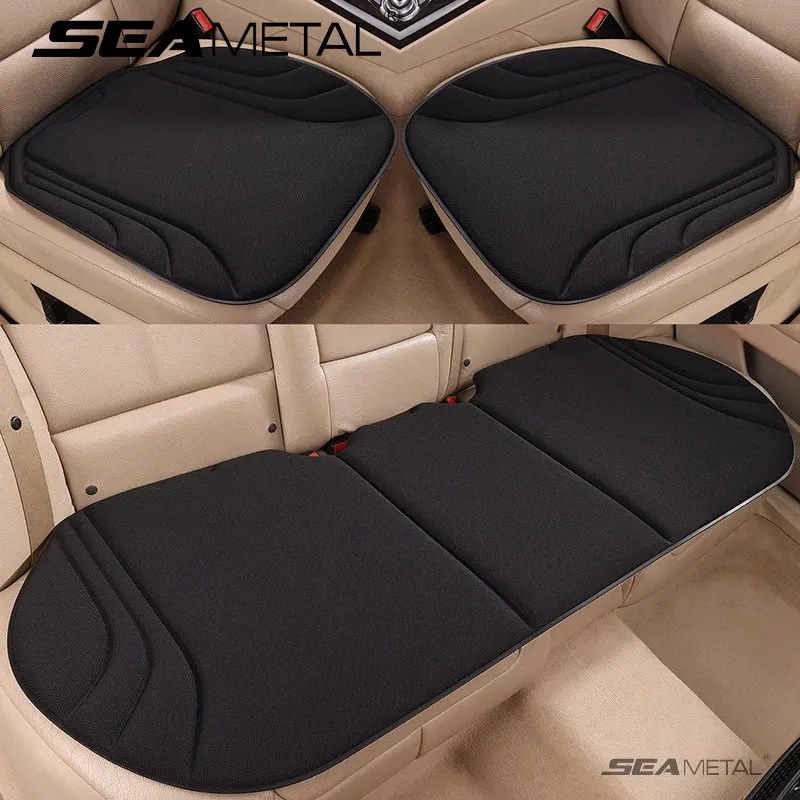
Seat cover material determines comfort far more than appearance does, and the differences are most obvious at the extremes of British weather: a cold morning in February and a hot afternoon in July.
Flax and linen blends
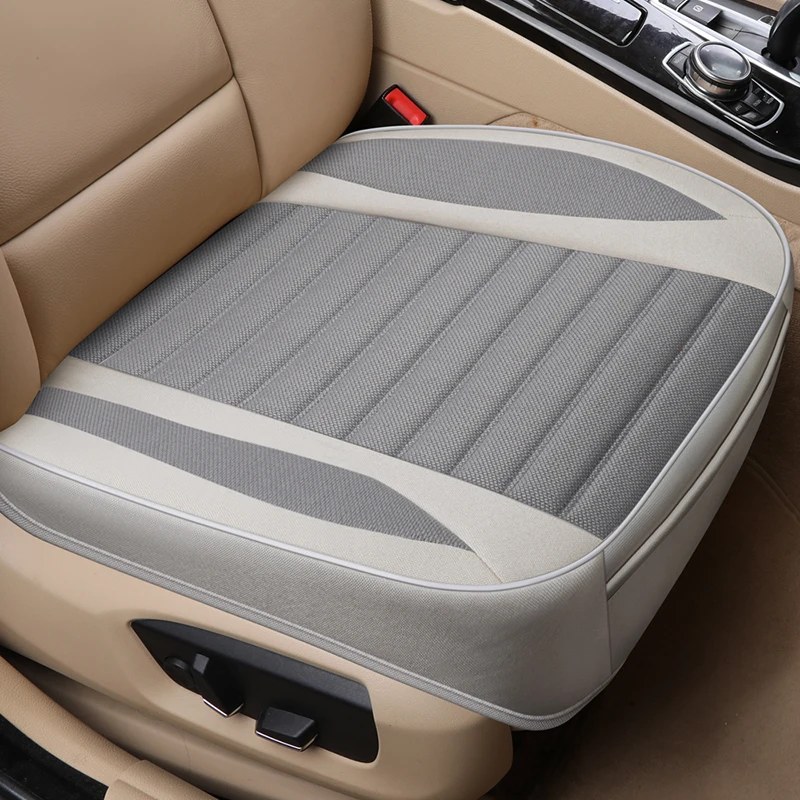
Breathable, natural-feeling and good across a wide temperature range. They do not go cold in winter or sticky in summer, which makes them the most consistently comfortable option for year-round use in the UK. They stain more readily than synthetics, so they suit cars without dogs or small children.
Leatherette and PU
Wipeable, smart-looking and excellent against spills. The trade-off is temperature: cold to sit on in winter and sweaty on a long summer drive, because nothing breathes through them. Best for cars that want a premium look and get wiped down often.
Neoprene and wetsuit-style
Highly water-resistant and hard-wearing, which makes them the default for dogs, watersports and work vehicles. They do not breathe, so they are warm, and cheaper versions can smell when new.
Mesh and 3D spacer fabric
Designed for airflow. These are the summer answer and are genuinely effective on long drives, but they offer less protection against liquid and look more utilitarian.
- Best all-round comfort: flax or linen blend
- Best for spills and easy cleaning: leatherette
- Best for dogs and wet kit: neoprene
- Best in hot weather: mesh or spacer fabric
Fit types and what they mean
- Universal: cheapest, elasticated, fits most conventional seats loosely. Expect wrinkles.
- Semi-tailored: shaped for a body style rather than an exact model. A reasonable compromise.
- Tailored: made for your specific model and trim, including airbag seams and control cut-outs. Best appearance and the only sensible choice for sculpted seats.
If your seats have integrated controls, side airbags or unusual bolsters, universal covers will look and work poorly no matter how good the material is.
Airbag compatibility, in detail
Seat-mounted side airbags deploy through a stitched seam in the outer bolster. A cover over that seam must have a corresponding tear seam designed to split under deployment pressure.
This is not a detail to compromise on. A cover without it can prevent or misdirect deployment, and the airbag is the reason the seat is shaped that way in the first place. Reputable covers state side-airbag compatibility explicitly; if a listing does not mention it, assume it is not compatible.
Washing and longevity
- Check the label; many covers are machine washable at 30 degrees
- Wash separately, as zips and clips damage other items
- Air dry rather than tumble dry, which shrinks fit permanently
- Refit while very slightly damp for the tightest result
- Expect three to five years from a mid-range set in daily use
Frequently asked questions
Do universal covers fit properly?
Universal covers fit most conventional seats acceptably but rarely perfectly. Sculpted sports seats and seats with integrated controls usually need a tailored option.
Will covers make my seat heater useless?
A thin cover passes heat through with a short delay. Thick padded covers noticeably reduce it.
