
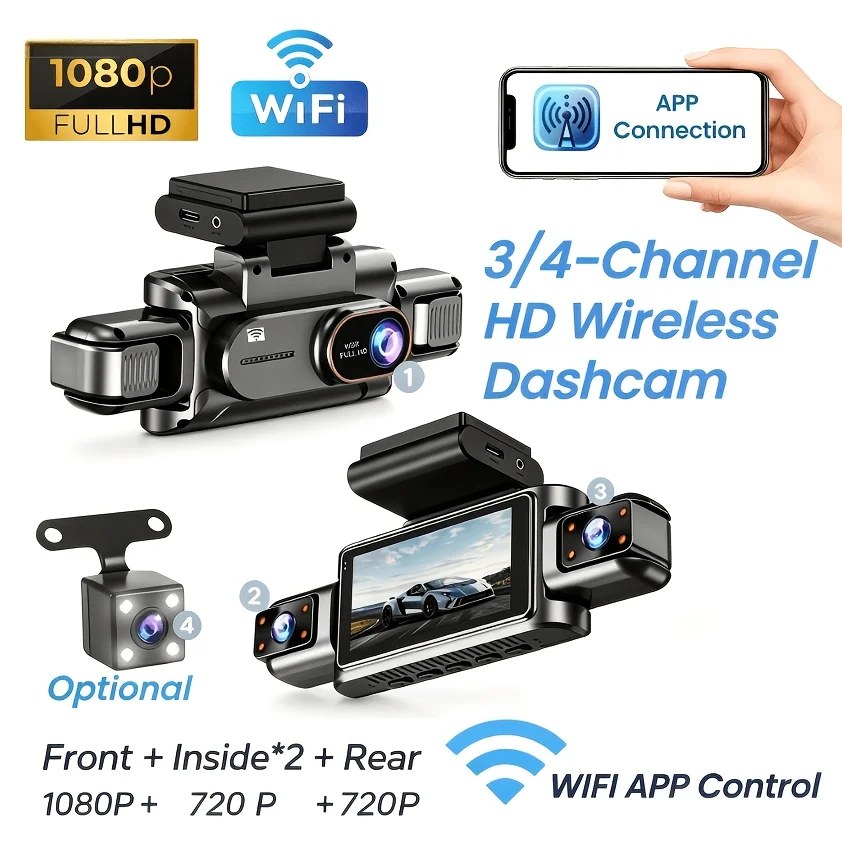
Dash cams are entirely legal in the UK and increasingly common. The conditions attached to them are straightforward but worth knowing, particularly around where the camera is mounted and what happens to footage afterwards.
Placement and your view of the road
The camera must not obstruct your view. In practice that means behind the rear-view mirror, high on the windscreen, where the mirror already blocks your sightline. A camera stuck in the middle of the screen can result in a penalty regardless of how good the footage is.
Cables should be tucked into the headlining and A-pillar trim rather than hanging across the screen. Take care around the A-pillar on cars with curtain airbags: route the cable around the airbag, not over it.
Audio, passengers and data protection
Recording video of a public road is fine. Audio is more sensitive, because it captures conversation. If you carry passengers, particularly paying passengers, you should tell them they are being recorded. Many drivers simply disable audio.
Personal use is exempt from most data protection obligations. If you use the car for business, or you are a taxi or delivery driver, UK GDPR obligations can apply and a sign in the vehicle is sensible.
Sharing footage
- Sending footage to police or an insurer is fine and is the main point of having one
- Most forces accept submissions through the national dash cam portal
- Publishing footage publicly with visible plates and faces is where problems arise
- Never use footage to identify or confront another driver
Does it affect insurance?
Some insurers offer a discount, though it is less common than it once was. More significantly, clear footage settles liability disputes quickly, which protects your no-claims position when someone disputes fault.
Tell your insurer you have one. It is not usually a modification requiring disclosure, but a hard-wired installation is worth mentioning.
Using footage in an insurance claim
Footage is most valuable in disputed liability, which is where claims become slow and expensive. A clear recording of the moments before an impact usually settles the question immediately.
- Tell your insurer footage exists when you first report the incident
- Provide the original file, unedited, with its timestamp intact
- Keep your own copy; do not send your only version
- Note the time of the incident to help them locate the relevant clip
It also protects against fraudulent claims. Induced accidents, where a driver brakes sharply to cause a rear-end collision, are difficult to disprove without footage and straightforward with it.
Driving abroad
Dash cam rules vary across Europe and some countries are considerably stricter than the UK. Austria has effectively prohibited private dash cam use, and Portugal and Luxembourg have significant restrictions. Others permit recording but restrict sharing footage.
If you are driving in Europe, check the rules for each country on your route before you travel. Penalties in the strictest jurisdictions are significant, and ignorance is not accepted as a defence.
Telling passengers, practically
If audio recording is on and you carry passengers, a small sticker in the cabin is the simplest way to meet the expectation of notice. For private family use this is rarely an issue; for taxi, private hire or delivery work it matters, and the ICO expects clear signage.
Frequently asked questions
Can dash cam footage be used against me?
Yes. If your own footage shows you speeding or driving carelessly it can be used in evidence, including by your insurer.
Do I need to tell passengers they are being recorded?
If audio is enabled, you should. Many drivers turn audio off to avoid the issue entirely.
