
Escape tools are among the few pieces of car equipment where storage location matters as much as the tool itself. A safety hammer in the boot is of no use in the situation it exists for.
What these tools are for
Two scenarios: a seat belt that will not release, and a door that will not open with the vehicle needing to be left quickly. The second is most associated with water, but it also applies after a collision that has deformed a door frame.
Where to keep it
- Driver’s door bin, within reach while belted
- Centre console, if it opens easily one-handed
- Clipped to the side of the seat base
Not the glovebox if it is a stretch while belted, and never the boot.
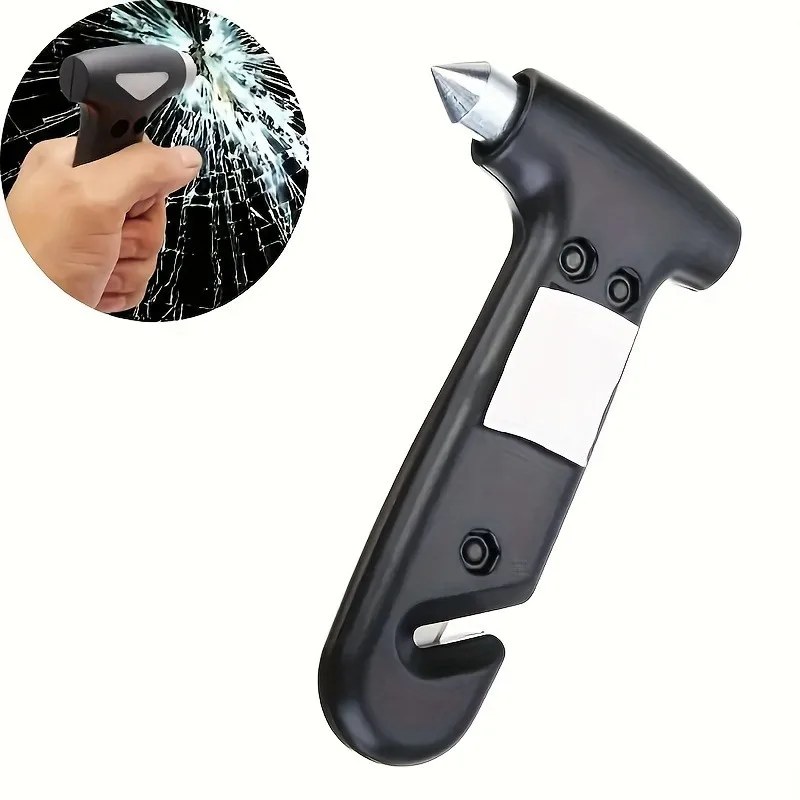
How window breakers work
Side windows are toughened glass, designed to shatter into blunt fragments. A spring-loaded punch concentrates force into a tiny point and breaks it easily. A hammer works but needs a firm strike near a corner, not the middle.
Windscreens are laminated and will not shatter, and increasingly some side windows are laminated too for security and noise. If a side window is marked laminated, a breaker will not get you through it, which is worth knowing in advance.
Check it occasionally
Spring-loaded punches can seize if they live in a damp door bin for years. Check the mechanism moves freely once in a while, and make sure passengers who drive the car know where it is.
Escaping a vehicle in water
This is the scenario these tools are most associated with, and the sequence matters more than the equipment.
- Act immediately; a car typically floats briefly before sinking
- Release seat belts, yours and any passengers’
- Open or break a side window, not the windscreen, which is laminated
- Get children out first, starting with the oldest who can help
- Exit through the window and swim clear
Do not wait for the car to fill so pressure equalises; that advice circulates widely and costs time you do not have. Do not try the doors, which will not open against water pressure.
A basic first aid kit
Not a legal requirement in the UK for private cars, but genuinely useful, and required in some European countries if you drive abroad.
- Assorted dressings and bandages
- Disposable gloves
- Foil blanket, which is also useful for warmth after a breakdown
- Antiseptic wipes
- Scissors and tape
Check the contents once a year; adhesive dressings perish in the heat cycles a car goes through.
Making sure passengers know
An escape tool only works if the person who needs it knows it exists. If you regularly carry other drivers or family members, tell them where it is kept, and keep it in the same place permanently so nobody has to search.
Frequently asked questions
Will a window breaker work on a laminated window?
No. Laminated glass has a plastic interlayer that holds it together. Check your car’s glass markings so you know which windows are toughened.
Are phone-mounted or keyring escape tools any good?
The keyring versions are usually too small to generate enough force reliably. A proper hammer-style tool kept in reach is far more dependable.
