
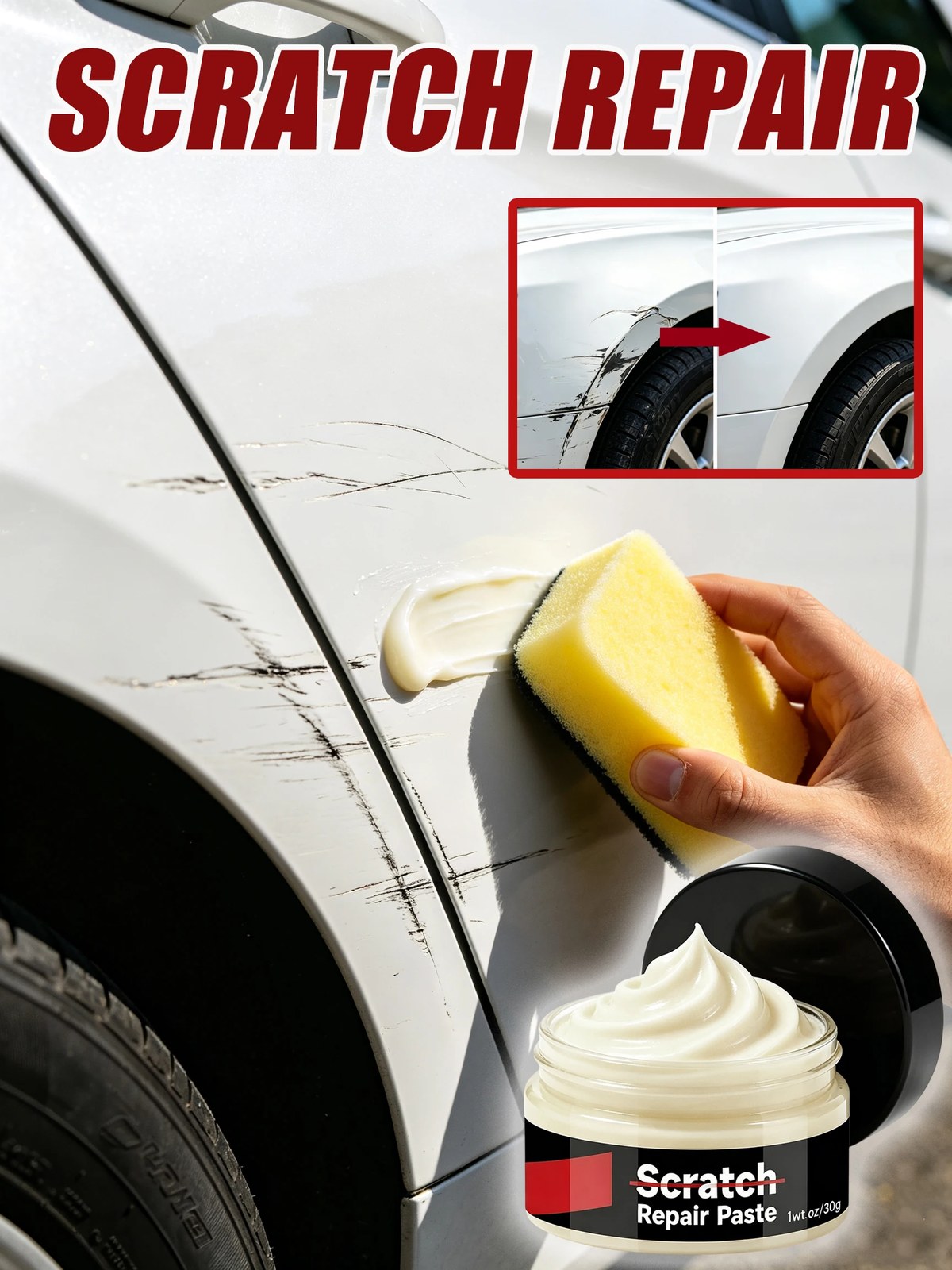
Stone chips are unavoidable on British roads, particularly on the bonnet leading edge and behind the wheels. What matters is whether the chip has gone through to bare metal, and how quickly you deal with it if it has.
Assess the chip
Clean the area and look closely in good light. A chip that shows primer, usually grey or white, has not reached metal and is not urgent. A chip showing bright silver metal, or any brown discolouration, needs attention now.
Brown means oxidation has already started. It will spread under the surrounding paint if left.
Getting the paint code
Touch-up paint must match your car’s code, not just the colour name. The code is usually on a sticker in the driver’s door shut, under the bonnet, or in the boot near the spare wheel. Two cars of the same model and apparent colour can have different codes across production years.
The repair
- Clean the chip with a degreaser and let it dry fully
- If there is any rust, remove it gently with a fine abrasive on a cocktail stick
- Apply primer only if bare metal is showing, in a thin layer
- Build colour in several thin coats, letting each dry, rather than one thick blob
- Let it cure for a day or two
- Level the excess very carefully if it stands proud, then polish the area
- Apply wax or sealant to protect the repair
The commonest mistake is applying too much paint at once. A raised blob is more noticeable than the chip was.
Managing expectations
A touch-up repair stops corrosion; it does not become invisible. At arm’s length on a dark colour it will be hard to spot, and that is a good outcome. Perfect results need a body shop.
Where chips concentrate, and why
- Bonnet leading edge, from stones thrown by vehicles ahead
- Front bumper and grille surround
- Wing mirrors and A-pillars
- Behind the front wheels, on the leading edge of the sills
- Rear arches, from the front tyres throwing debris back
Motorway driving in winter is the worst combination: high speed, grit on the road and plenty of it. If you do a lot of motorway miles between November and March, expect chips and check for them in spring.
Protective film, if chips bother you
Paint protection film is a clear urethane layer applied over vulnerable panels. It genuinely stops stone chips, and on a bonnet leading edge and front bumper it is the only thing that reliably does.
It is not cheap, and it is worth doing properly, because badly fitted film lifts at the edges and traps dirt. On a new or nearly new car that you intend to keep, film on the front end is a reasonable investment. On an older car, touch-up paint and vigilance is the proportionate answer.
Rust that has already started
A small blister in the paint means corrosion is already working underneath, and it will always be larger than it looks from the surface.
- Assess honestly whether it is surface rust or has gone through
- Surface rust can be treated: remove it fully, use a rust converter, prime and paint
- Rust through from behind, common on sills and arches, needs welding, not filler
- Filler over active corrosion always fails, usually within a year
- Get an advisory on the MOT checked properly rather than ignored
Corrosion in a structural area is an MOT failure, not a cosmetic issue, and it is considerably cheaper to address early.
Frequently asked questions
Where do I find my paint code?
Most commonly a sticker in the driver’s door shut. Check under the bonnet and in the boot if not, or ask a dealer with your registration.
Can I use a touch-up pen instead of a brush?
Pens are easier to control on very small chips. For anything larger than a pinhead, thin layers with a fine brush give a better result.
