
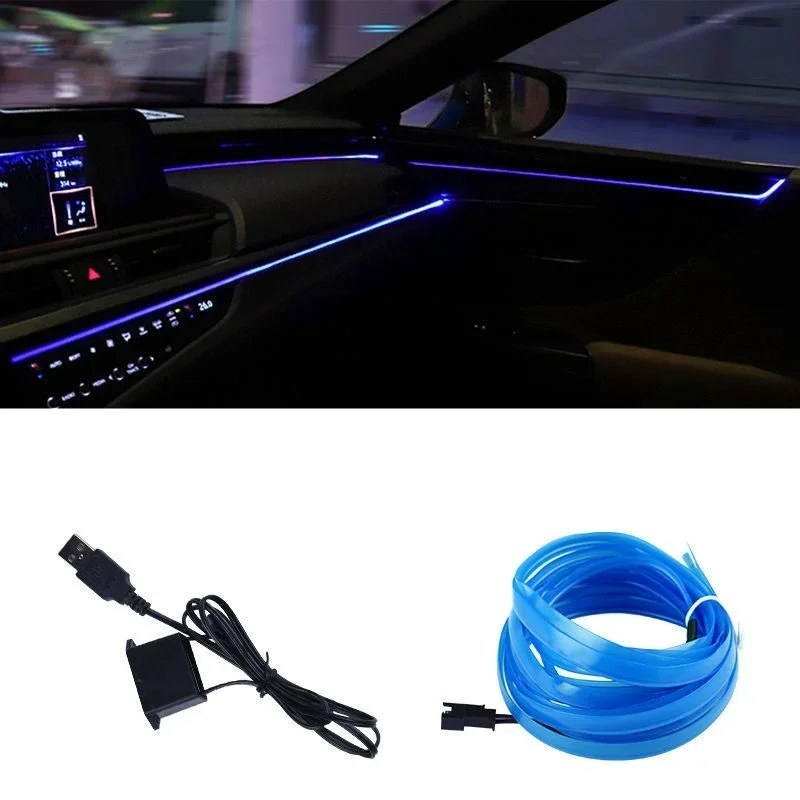
Factory ambient lighting works because it is subtle, evenly diffused and completely hidden. Most aftermarket installs fail on at least one of those three, which is why they can look worse than nothing.
Brightness: far lower than you think
Factory systems run at a level you barely notice until you switch them off. Aftermarket kits usually ship far too bright. If the lighting is the first thing you see when you open the door at night, it is too much.
Choose a kit with a dimmer, and set it low enough that it does not reflect in the windscreen or side glass.
Colour choice
- Warm white and amber look the most expensive and are easiest on the eyes
- Ice white is clean but unforgiving of dusty trim
- Red preserves night vision but reads as boy-racer to many
- Blue is the most common choice and the one that dates fastest
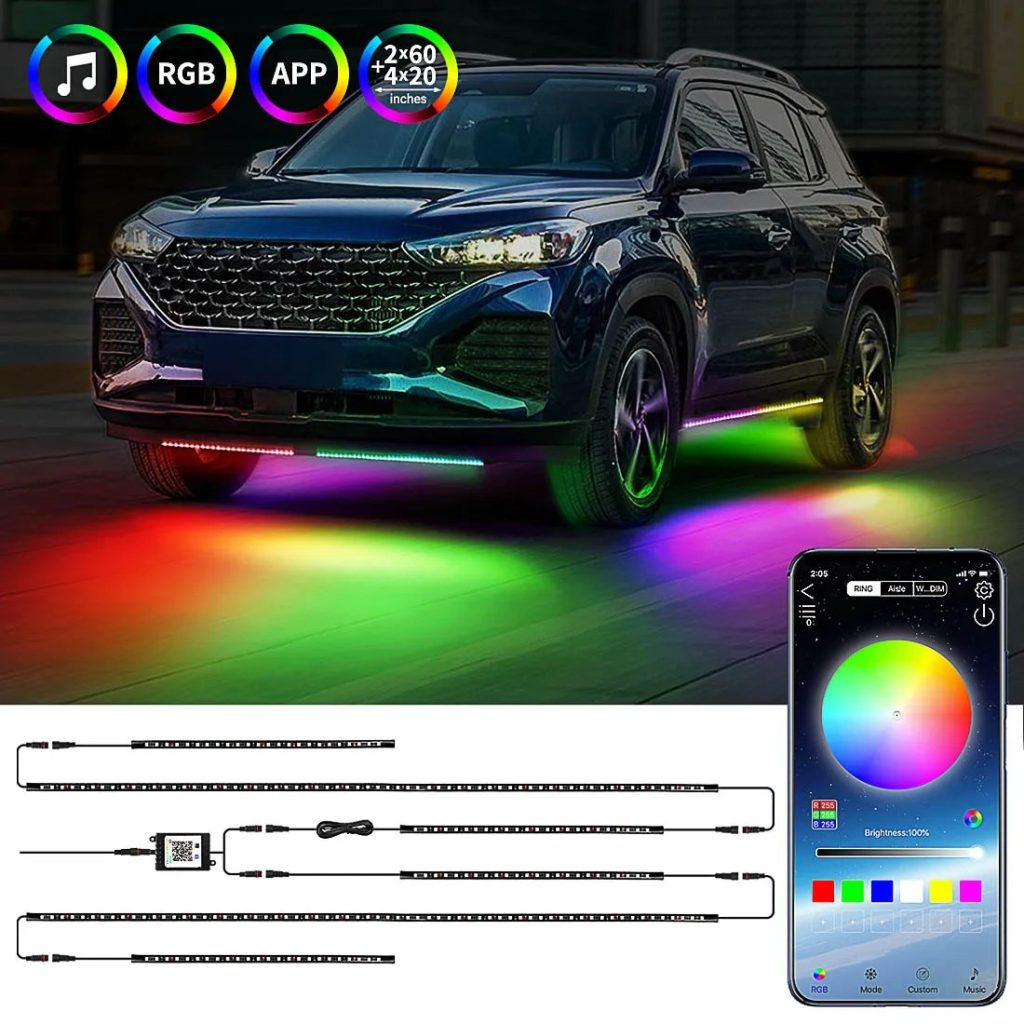
- Avoid colour-cycling modes while driving; movement in peripheral vision is distracting
Hide the source
Visible LED dots are the single biggest giveaway. Use fibre-optic style strip or tuck the emitter under a lip so you see a glow on a surface rather than the light itself. Light bouncing off a door card looks designed; a visible strip stuck along it does not.
Safety and legality
Nothing may be visible from outside in red or blue. Nothing may distract or reflect into your sightline. And nothing should be routed over an airbag path in an A-pillar or seat.
Fibre optic versus strip
Factory ambient systems mostly use a fibre-optic tube lit from one end, which gives an even line of light with no visible hotspots. Aftermarket kits copying this approach look considerably more convincing than adhesive strip.
The trade-off is installation: the tube has to be pushed into a panel gap, which takes patience and a trim tool, and getting a clean line round a door card curve is fiddly. The result, done carefully, is close to a factory finish.
Control options
- App control over Bluetooth: flexible but fiddly while driving
- Physical dimmer: the most practical, set once and leave
- Wired to the courtesy light circuit: comes on with the doors, which looks intentional
- Sound-reactive modes: fine parked, distracting on the move
Common mistakes
- Too bright, which reads as cheap and reflects in the glass
- Visible LED dots rather than a diffused glow
- Wiring visible at the door hinge or under the dashboard
- Colour that clashes with the car’s existing instrument lighting
- Running a strip across an airbag seam
Matching the colour of your instrument backlighting is the single easiest way to make aftermarket lighting look factory-fitted.
Frequently asked questions
Can I sync ambient lighting to music?
Many kits offer it. It is fine when parked, but movement in your peripheral vision while driving is a genuine distraction; switch it to static on the move.
Will this affect my car’s warranty?
Splicing into factory wiring can cause problems with an electrical claim. A self-contained USB kit avoids the issue.
